
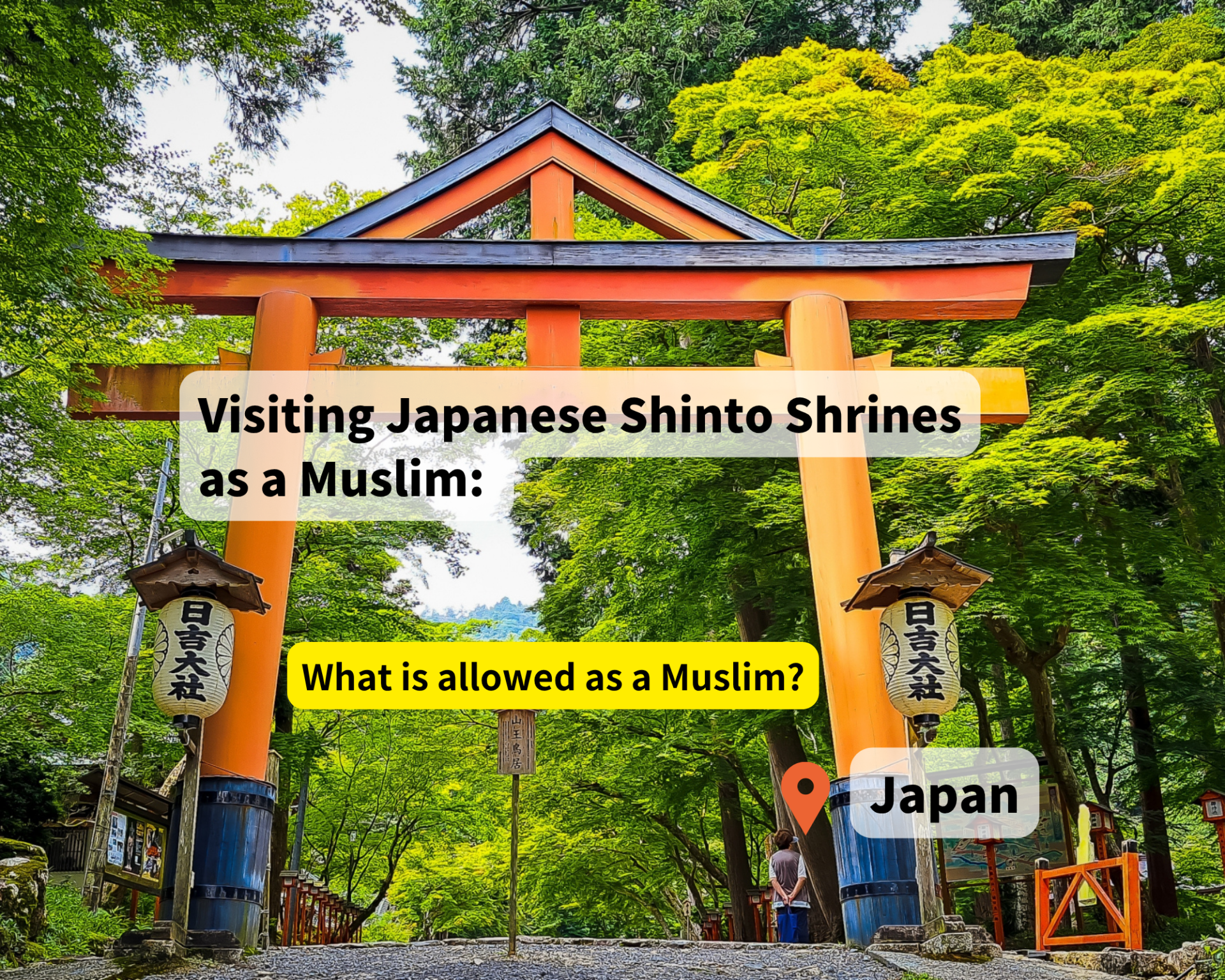

When visiting Japan, Shinto shrines are almost always on the sightseeing itinerary. From the iconic red torii gates of Kyoto to the peaceful shrines surrounded by beautiful forests, they are an essential part of experiencing Japanese culture.
But if you are a Muslim traveler, you might wonder: Is it okay to visit a Japanese shrine? What should you do, and what should you avoid?

Japan’s religious traditions may be unfamiliar to many international visitors, and it is not always easy to know which activities are simply cultural customs and which are religious practices.
In this guide, we will introduce the basics of Shinto and explain what Muslim travelers should know when visiting Japanese shrines.
First, What Is Shinto?
Japan has two major traditional religious traditions: Shinto and Buddhism.
Shinto is Japan’s indigenous religion, with roots in ancient Japanese beliefs. It is centered around the worship and reverence of kami, which are spirits or sacred powers associated with nature, mountains, rivers, trees, and other aspects of the world.
Shinto shrines (jinja) are places dedicated to these kami.
Buddhism, on the other hand, originated in India and was introduced to Japan through China and Korea. Buddhist temples (otera) are places of Buddhist worship and practice.
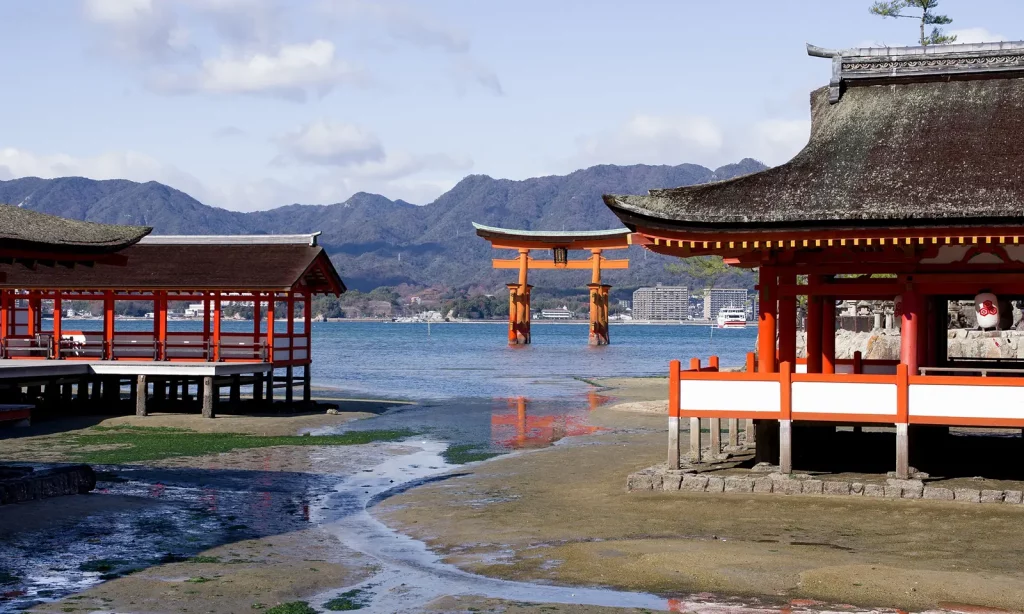
Although Shinto and Buddhism have influenced each other throughout Japanese history, they are different traditions.
You will often see red torii gates at Shinto shrines. These gates mark the entrance to a sacred space and are one of the most recognizable symbols of Japanese culture.
Can Muslims Visit Shinto Shrines?
Yes! Muslims can visit Shinto shrines as tourists to appreciate Japanese architecture, history, and natural surroundings.
However, some activities at shrines are religious customs. Here are a few things to know before your visit.
1. Can You Walk Through a Torii Gate?
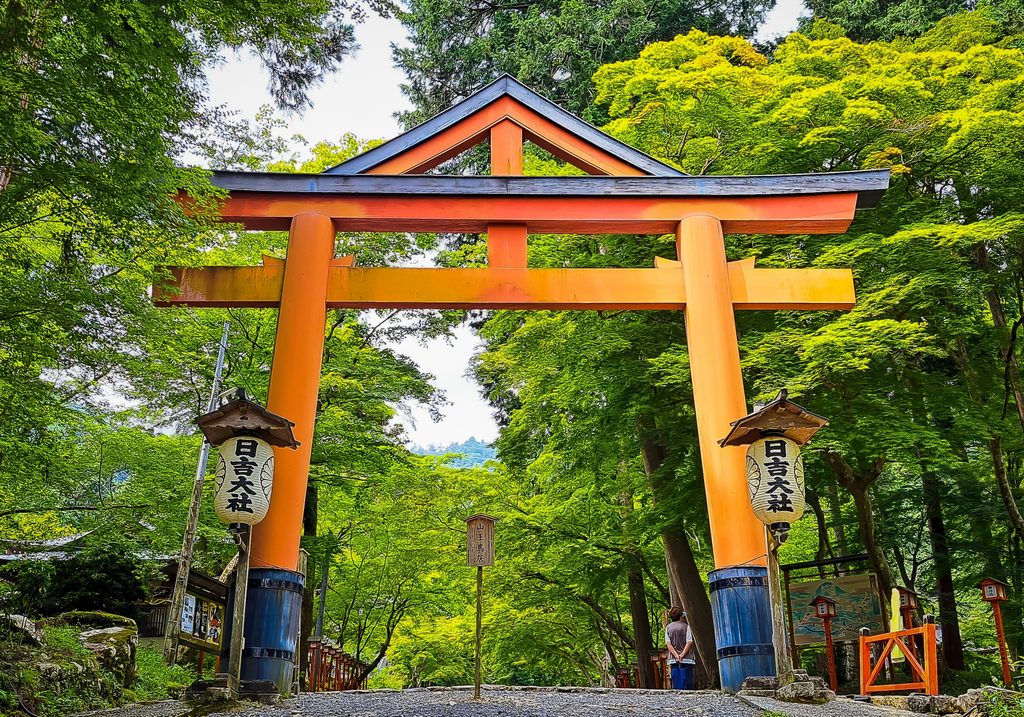
A torii is a traditional gate marking the entrance to a Shinto shrine. It symbolizes the transition from the everyday world to a sacred space.
Walking through a torii gate is not necessarily a religious act. You can simply pass through as a visitor.
Some Japanese visitors bow before passing through, but this is a traditional custom rather than something tourists are required to do.
2. What Is Temizu? (Purification Ritual)
Near the entrance of many shrines, you will find a water pavilion called temizuya.
Visitors traditionally rinse their hands and mouth with water before approaching the main shrine. This is a Shinto purification custom.
Muslims who prefer not to participate in religious rituals can simply skip this activity and continue their visit.

3. Do You Need to Make an Offering?
At the main hall, you may see a large wooden offering box.
Japanese visitors often throw coins into the box, bow twice, clap twice, and bow once more. This is a traditional Shinto prayer ritual.
Muslim visitors do not need to make an offering or participate in this ritual. You can simply observe the architecture and surroundings.

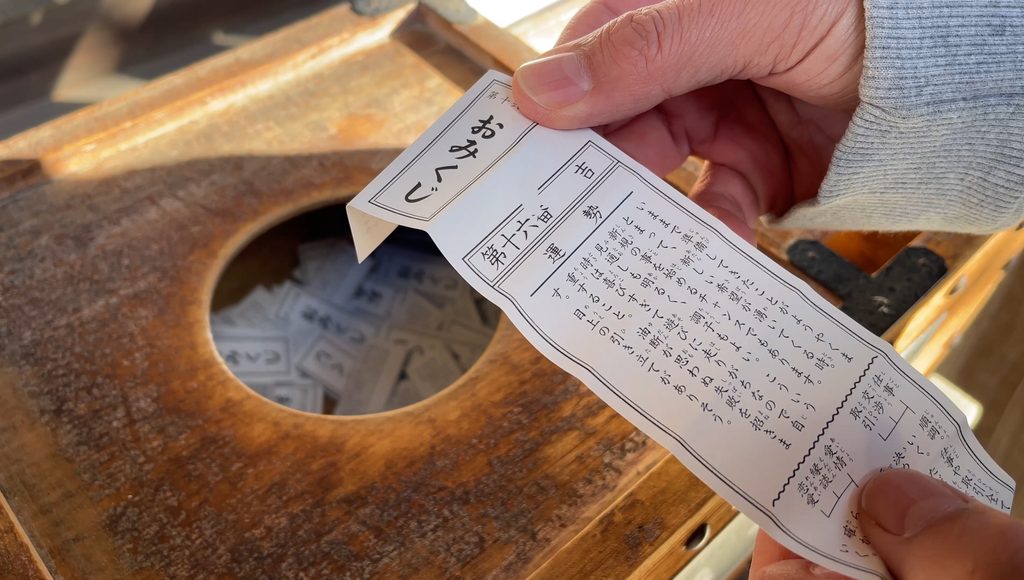
4. What Are Omikuji?
Omikuji are small paper fortunes available at many shrines.
Visitors draw one to discover their fortune, which may include predictions about health, relationships, work, or travel.
Some people tie their fortunes to designated trees or racks within the shrine grounds.
Muslims who avoid fortune-telling or practices associated with divination may prefer not to participate.
5. What Should You Wear?
There is generally no strict dress code for visitors.
However, shrines are culturally significant places, so modest clothing is recommended. Muslim women can comfortably visit wearing their hijab and usual modest clothing.
Enjoy Japanese Culture at Your Own Pace
Shinto shrines offer a unique opportunity to discover Japan’s history, architecture, and traditions.
You can admire the beautiful torii gates, peaceful gardens, and traditional buildings without participating in religious practices.
We hope this guide helps Muslim travelers enjoy Japan with confidence while respecting both Japanese culture and their own beliefs.