


Many Muslim travelers assume that if they can explain their dietary requirements in Japanese, restaurants will be able to prepare a suitable meal.
Unfortunately, the answer is no.
While Japanese people are generally welcoming and willing to help international visitors, the challenge is not language. The challenge is that many restaurant staff members are still unfamiliar with halal requirements and Muslim dietary restrictions.
👉Join our 7N8D Japan Golden Route Package Tour
👉Check how we ensure Muslim-friendly Tour in Japan
The Biggest Issue: Lack of Understanding About Halal Requirements
One of the most common misconceptions in Japan is that removing visible pork ingredients is enough to make a dish suitable for Muslim guests.
A restaurant staff member may genuinely try to accommodate a request by:
- Removing slices of pork from a bowl of ramen
- Taking bacon off a salad
- Replacing a meat topping with vegetables
However, they may not realize that:
- The soup stock contains pork
- The sauce contains alcohol
- Seasonings include animal-derived ingredients
- Cooking equipment is shared with non-halal foods
From the restaurant’s perspective, they have successfully modified the dish.
From a Muslim traveler’s perspective, the meal may still not be suitable.
This misunderstanding does not usually come from bad intentions. Rather, it comes from a lack of knowledge about halal requirements, especially in areas where Muslim visitors are still relatively uncommon.
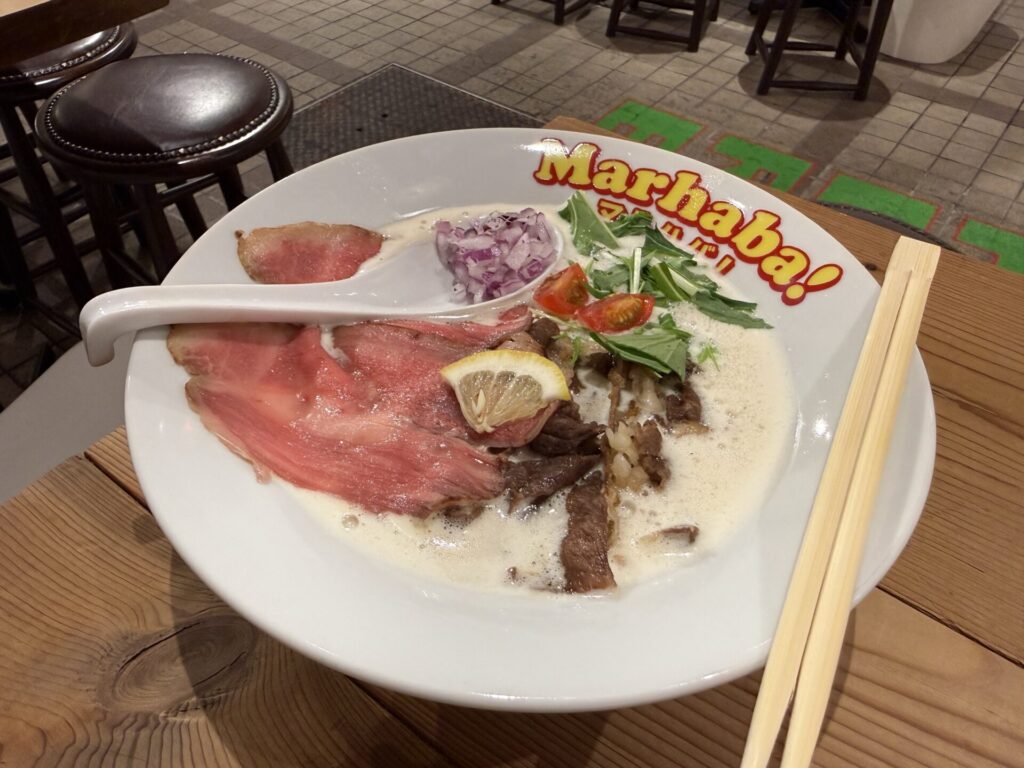
Speaking Japanese Does Not Guarantee Understanding
Even if you speak fluent Japanese, there is no guarantee that the person serving you fully understands what your dietary requirements involve.
A conversation may sound successful:
“No pork, please.”
“No problem.”
However, both sides may be thinking about very different things.
The traveler may be considering ingredients, stock, seasonings, alcohol, and cross-contamination.
The restaurant staff member may simply be thinking about removing visible pork from the plate.
Because of this gap in understanding, language alone cannot guarantee that a meal will meet your requirements.

Last-Minute Requests Can Be Difficult for Restaurants
Another important point to understand is Japanese restaurant culture.
Many restaurants prepare ingredients in advance and operate with limited staff, particularly during busy lunch and dinner hours.
Making significant changes to a menu item without prior notice may not always be possible.
While many restaurants genuinely want to help, unexpected requests can place additional pressure on kitchen staff who may already be working at full capacity.
This is especially true in rural areas, where halal awareness is often lower and alternative ingredients may not be available.
What Happens If You Cannot Eat the Meal?
This is where many travelers encounter an unexpected problem.
Imagine that a restaurant carefully prepares a special meal after listening to your request.
When the food arrives, you discover that the soup contains a non-halal ingredient, or the staff cannot confirm what is included in a seasoning.
As a result, you decide that you cannot eat the meal.
While this decision may be necessary from a religious perspective, it can create an uncomfortable situation.
For many Japanese people, wasting food is not simply a matter of preference. It is closely connected to cultural values of gratitude, respect, and appreciation for the effort that goes into preparing a meal. As a result, leaving a specially prepared dish untouched can be perceived as deeply disrespectful.
Most restaurant staff will not express this directly. However, situations like these can create confusion and disappointment on both sides.
The traveler may feel frustrated because they cannot safely eat the meal.
The restaurant may feel frustrated because they genuinely believed they had accommodated the request.
Neither side intended to create a problem, but a cultural misunderstanding has occurred.

Preparation Is Essential—Especially Outside Major Cities
The good news is that most of these situations can be avoided through proper preparation.
Before visiting a restaurant, consider:
- Researching Muslim-friendly or halal dining options in advance
- Contacting restaurants before your visit whenever possible
- Confirming ingredients and preparation methods beforehand
- Having alternative dining options nearby
- Planning meals carefully when traveling in rural areas
This preparation becomes even more important outside major tourist destinations such as Tokyo, Osaka, and Kyoto.
Japan is an amazing destination for Muslim travelers, and many restaurants sincerely want to welcome international guests. However, speaking Japanese alone does not guarantee that a meal will be Muslim-friendly.
Understanding local realities and preparing ahead of time will help you avoid misunderstandings, reduce stress, and enjoy a much smoother travel experience throughout Japan.
If you are planning to explore regional Japan, advance preparation is not just helpful—it is essential.
👉Check how we ensure Muslim-friendly Tour in Japan
Japan