


Finding halal food in Japan has become much easier than before. Today, several mobile apps claim to determine whether a product is halal simply by scanning the barcode or ingredient list.
While these apps can be helpful as a first step, relying on them alone can be risky.
We experienced this firsthand.
When we scanned a Calbee snack using one of these apps, it was labeled as “Halal.” However, this result surprised us because Calbee products are generally produced in facilities that also handle pork ingredients.
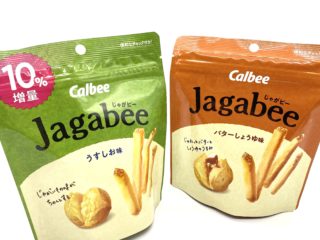

For many Muslims, this level of cross-contamination (contamination through shared production lines) means the product would not meet their personal halal standard.
So why did the app say it was halal?
Most Apps Only Check the Ingredients
The biggest limitation is that many halal-checking apps analyze only the ingredient list.
They usually do not consider important factors such as:
- Cross-contamination during manufacturing
- Shared production equipment with non-halal ingredients
- Cleaning procedures between production runs
- Manufacturing policies of each company
For Muslims who avoid any possibility of cross-contamination, this information is just as important as the ingredients themselves.
Product Databases Are Not Always Up to Date
Some apps use databases that classify individual products instead of only analyzing ingredients.
However, Japan has tens of thousands of food products, with new products and recipe changes appearing constantly.
It is extremely difficult for any database to stay completely up to date.
As a result, an app may display outdated information or classify a product based on incomplete data.

What Is the Safest Approach?
If you want to minimize the risk of accidentally consuming something that does not meet your halal requirements, we recommend the following:
- Choose products with recognized halal certification whenever possible.
- Read the ingredient list carefully.
- After you find the product is made without forbidden ingredients, contact the manufacturer directly to ask about production processes.
- Before relying on any halal app, understand how that app determines whether something is halal. Every app is developed according to its own halal criteria, which may or may not match your personal beliefs or the standards you follow.
Remember that there is no single global halal standard. What one Muslim considers acceptable may not be acceptable to another.
Travel in Japan According to Your Halal Standard
We understand that every Muslim traveler has different halal requirements.
Some travelers only choose halal-certified restaurants, while others are comfortable with seafood or vegetarian options after confirming the ingredients. Some also wish to avoid cross-contamination entirely.
Rather than assuming one standard fits everyone, we help plan your trip according to your own halal criteria.
If you’re planning a trip to Japan and want recommendations you can trust, feel free to contact us. We’d be happy to help you create a journey that matches your personal halal needs.