

What Muslims Should Know About Japanese Seasonings
What Muslims Should Know About Japanese Seasonings
Japanese food is loved around the world for its delicate flavors and unique ingredients. However, many Muslim travelers are surprised to learn that alcohol-based seasonings are commonly used in Japanese cooking.
Even if a dish does not contain pork, it may still include ingredients that raise Halal concerns.
So, are soy sauce and miso Halal?
Let’s clarify what Muslim travelers should know before dining in Japan.
👉Check how we ensure Muslim-friendly Tour in Japan
Why Is Alcohol Used in Japanese Cooking?
Let’s start from alcoholic seasonings. Just like French cuisine, we use alcohol to cook food. Aims of adding these Just like French cuisine uses wine in cooking, Japanese cuisine also uses alcohol-based seasonings for several purposes:
- To remove the smell of meat or fish
- To tenderize ingredients
- To enhance umami flavor
- To preserve texture and color
Alcohol is usually added during cooking and evaporates under heat. Many Islamic scholars state that if the final alcohol content is below 0.5% and it is not used for intoxication, it may be considered permissible.
However, opinions differ. Some Muslims prefer to avoid any ingredient derived from alcohol entirely.
If you wish to strictly avoid alcohol, the following seasonings are important to recognize.
Alcohol-Based Japanese Seasonings
Sake (酒)
“Sake” literally means alcohol in Japanese. There are two types:
- Drinking sake
- Cooking sake
Both contain alcohol and are widely used in simmered dishes, grilled fish, sauces, and marinades.
Mirin (みりん)
Mirin is a sweet cooking seasoning made from shochu (a Japanese distilled alcohol). It is commonly used:
- In teriyaki sauce
- In nimono (simmered dishes)
- On rice crackers
- In some traditional sweets
These ingredients are extremely common in Japanese cuisine.
Seasonings That May Contain Residual Alcohol
Even if alcohol is not directly added, some seasonings may contain trace amounts due to fermentation or preservation processes.
These include:
- Soy sauce
- Miso
- Vinegar
- Mayonnaise
- Ketchup
- Flavoring extracts
- Enzymes
Why Can They Contain Alcohol?
There are three main reasons:
1. Natural Fermentation
Soy sauce and miso are fermented products. Fermentation of sugars can naturally produce very small amounts of alcohol.
2. Preservation
Some manufacturers add minimal alcohol to stop further fermentation and extend shelf life.
3. Alcohol-Based Extraction
Certain flavorings are extracted using alcohol, which may leave trace residues.
In most cases, the alcohol percentage is very low — often below 0.5%. Many Halal certification bodies accept this level. However, interpretations vary among individuals.

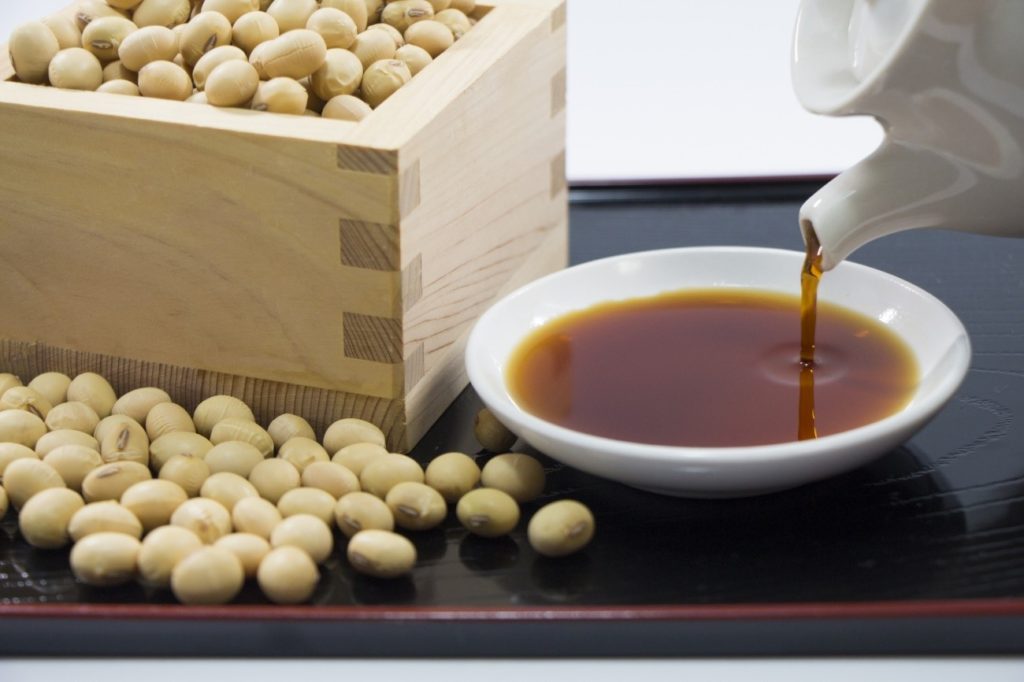
Are Soy Sauce and Miso Halal?
The answer depends on:
- The production method
- The certification status
- Your personal religious interpretation
Many Muslims consider standard fermented soy sauce and miso permissible if alcohol content is minimal and not intoxicating. Others prefer Halal-certified alternatives.
If you follow a stricter interpretation, you may wish to:
- Choose Halal-certified Japanese restaurants
- Confirm ingredients directly
- Avoid dishes with unclear sauces
Why This Matters When Eating in Japan
Many Japanese people understand that Muslims do not eat pork.
However, fewer people realize that seasonings themselves may be a concern.
Simply asking for “no pork” is often not enough.
Traditional dishes such as:
- Ramen broth
- Teriyaki sauce
- Simmered vegetables
- Grilled fish
may still contain mirin, sake, or fermented seasonings.
How Can Muslims Avoid These Seasonings?
Because these ingredients are fundamental to Japanese cuisine, completely avoiding them in regular restaurants can be difficult.
The safest options are:
- Halal-certified restaurants
- Muslim-friendly restaurants with trained chefs
- Vegetarian options (after confirming ingredients)
- Pre-arranged Halal bento delivery
- Private meal coordination during tours
Each traveler has a different comfort level regarding Halal interpretation. The most important thing is to be informed and choose what aligns with your belief.
Need Help Finding Halal Japanese Food?
We assist Muslim travelers by:
- Recommending reliable Halal restaurants
- Confirming ingredients with chefs
- Arranging Halal meal delivery to hotels
- Coordinating Muslim-friendly dining during tours
If you would like assistance arranging Japanese Halal meals during your stay, feel free to contact us. We are happy to help you enjoy Japanese cuisine with peace of mind.

✓Check How we ensure Muslim Friendly Tours in Japan