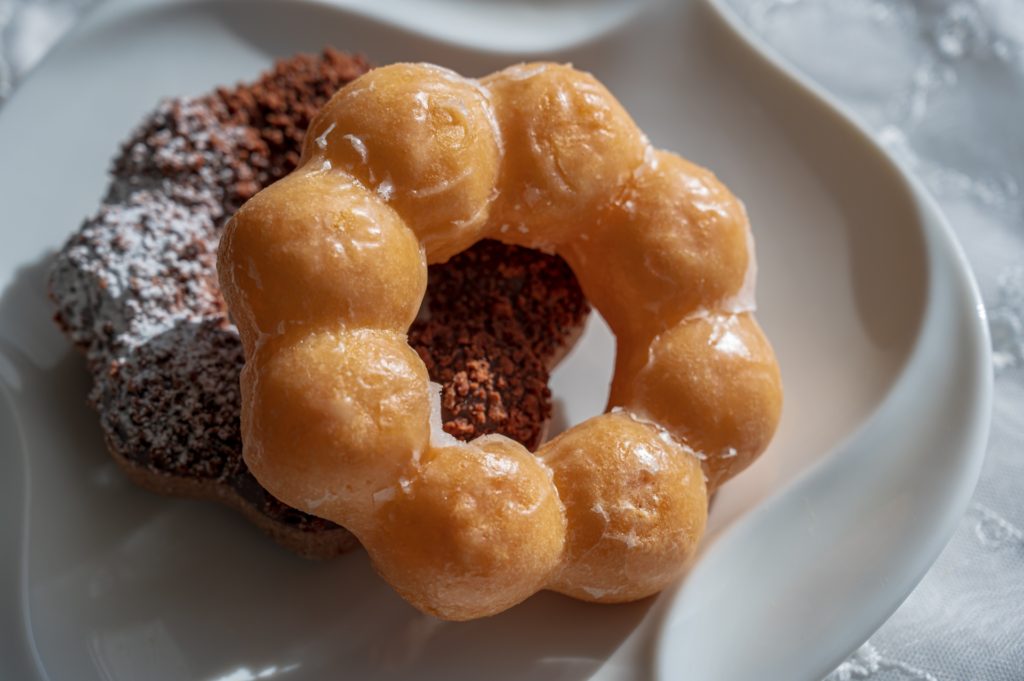
Mister Donut (ミスタードーナツ), or Misdo (ミスド) for short, is the No.1 donut shop in Japan. Some of you may know the shop because there are few branches in overseas, including Indonesia! Mister Donut Indonesia clearly says that they are Halal certified, which will make someone believe the same applies to the one in Japan. Unfortunately, the answer is no.
There is some confusion going about the Halal status of Mister Donut, so we have called the manufacturer and got the answer from them.
Mister Donut (ミスタードーナツ), often called “Misdo,” is the largest donut chain in Japan. It is widely available across the country and very popular among locals.
In Indonesia and Malaysia, Mister Donut is clearly marketed as Halal-certified.
However:
⚠️ The Halal status in Indonesia or Malaysia does NOT apply to Japan.
The manufacturing system and supervision are different.
Credit: https://www.misterdonut.jp/
Yellow-highlighted means Beef, Pork, Chicken, and Gelatin. Plus, their Shortening and Oil are confirmed as Plant-based. This means that there are some products which has no animal-derived products in Mr Donut.
After reviewing it, we found:
Some sweet donuts do not list meat-derived ingredients.
Shortening and frying oil are confirmed to be plant-based.
Certain items contain no obvious animal-derived ingredients.
At first glance, this may sound reassuring.
But Halal compliance is not only about ingredients. It is also about process.
Why Mister Donut Japan Is Not Halal
According to the official response, there are two major concerns:
1. Shared Manufacturing Machinery
All products are made using the same production line.
This means:
Donuts containing pork-derived ingredients
Donuts without meat ingredients
…are processed on the same machinery.
This creates a contamination risk.
2. Shared Frying Oil at Stores
Each store fries donuts on-site to ensure freshness.
However:
Frying oil is not separated by product type.
Stores nationwide cannot be individually monitored for Halal control.
Cross-contact risk cannot be eliminated.
Because of this, Mister Donut Japan does not claim to be Halal or Muslim-friendly.
They fry Donut in their kitchen.
Why Do Some Sweet Donuts List Pork and Others Don’t?
This is one of the biggest sources of confusion.
Some sweet donuts (that do not visibly contain meat) list pork in their allergen information. Others do not.
The explanation:
Many food additives in Japan can be animal-derived. If pork is listed, it may refer to additives rather than visible meat ingredients.
If pork is NOT listed, it means no pork-derived additives were used in that specific product.
However, again — shared machinery remains the issue.
So even if an item contains no animal-derived ingredients, the overall production system is not separated.
Halal Status of Mister Donut in Different Countries
One of the biggest reasons for confusion is that the Halal status of Mister Donut varies by country.
Here is the clarified situation:
Malaysia
Mister Donut Malaysia operates under local supervision and holds Halal certification from the relevant Malaysian authority.
Indonesia
Mister Donut Indonesia is Halal-certified under the Indonesian Halal certification system. Products are produced and managed according to local Halal standards.
Singapore
Mister Donut in Singapore does not hold Halal certification.
Why Is It Different?
Halal certification is:
Country-specific
Factory-specific
Process-specific
Even if the brand name is the same, the manufacturing facilities, ingredient sourcing, and supervision systems are different.
This means:
✔ Halal in Malaysia ✔ Halal in Indonesia ✖ Not Halal-certified in Singapore ✖ Not Halal-certified in Japan
Global presence does NOT mean global Halal status.
What Muslim Travelers Should Remember
When traveling to Japan, do not assume that a brand is Halal simply because it is certified in another country.
Always check:
Local certification status
Manufacturing system
Official announcements from the brand
When in doubt, choose clearly Muslim-friendly dining options to avoid unnecessary stress during your trip.
Information as of March 2026. We are only translating the labels and information and not judging if the item is Halal or not. Please use your own discretion to decide if you want to consume the item or not.